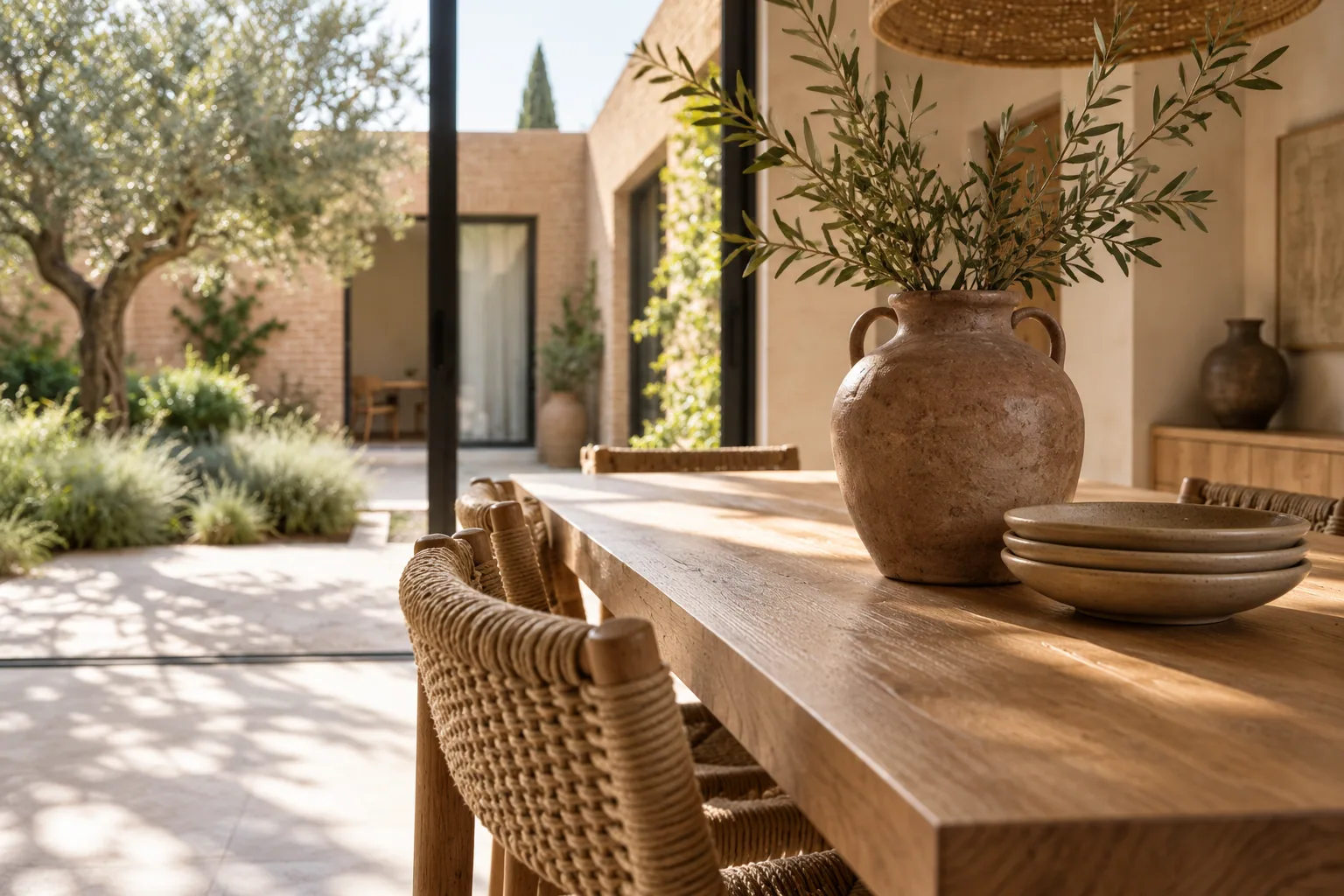
Bring a picture of your everyday life
A first design conversation works best when it begins with how the space is used. Describe your household, your daily rhythms and the moments that feel frustrating. Perhaps the dining table also becomes a workspace, or the hallway fills with outdoor equipment. Perhaps you love the morning light but cannot find a comfortable place to read. You do not need design vocabulary to explain these things. A simple account of what happens in each room is enough. Include what you would like to preserve as well as what you want to change. A good starting conversation should discover the character already present in your home.
Gather a small, honest set of references
Choose a handful of images and write a sentence beside each one. Explain whether you like the light, the colour, the storage idea or the sense of openness. This stops a designer from reading your appreciation of a timber floor as a request for the entire photographed room. Include one or two examples you dislike, with the same care. Avoid collecting references only because they look impressive online. Ask whether the surfaces, scale and arrangement support your real habits. A beautiful white sofa might express the calm you want without being the practical material choice for the people and animals who live with you.
Bring the information you already have
An existing floor plan, a few wide photographs and approximate dimensions can make the conversation more concrete. Mark any measurements that have not been verified. Include doors, windows, radiators and visible services where possible. If you rent, live in a managed building or share ownership, explain the permissions and restrictions you already know about. Do not feel obliged to commission technical surveys before understanding which service you need. The first conversation can identify missing information and the specialist checks that may follow. What matters is distinguishing known facts from guesses, so an appealing early idea does not become an unsupported technical assumption.
Talk about money without false precision
It is useful to describe a comfortable spending range and what it needs to cover. Does it include furniture purchases, professional fees and possible temporary accommodation, or only the physical work? You do not need an itemised budget at the first meeting. You do need a shared understanding of its boundaries. If you are unsure, say so and ask which decisions have the largest effect. A designer can help compare priorities, but a fictional online estimate cannot verify local prices or existing conditions. Keep the conversation focused on what is affordable and valuable to you, rather than what a reference interior appears to have cost.
Ask about the working relationship
Use the meeting to understand the process as well as the visual direction. Ask what will be delivered, how many decision stages are expected, how changes are handled and who coordinates with other specialists. Clarify whether sourcing means recommending products or managing purchases, and whether technical drawings include any specialist engineering. Ask how an agreed decision will be recorded. These questions are not a sign of distrust; they make a collaboration easier to navigate. If more than one person approves the project, explain that from the beginning. A practical decision process is just as important as a shared taste in materials or furniture.
End with a clear next step
Before the conversation ends, summarise what has been understood, what remains open and what information would help next. The next step might be a measured survey, a written scope for design work or simply a little more thinking within your household. It does not have to be an immediate commitment to a complete renovation. In this portfolio site, the contact form lets you rehearse that brief using sample details. It does not book a consultation or send a message to a studio. Use the project collection and saved estimate as prompts, and keep the most useful outcome in mind: a clearer description of the home you want to create.